
44 products

Leyda is the coldest serious vineyard land in Chile, and it gives this sparkler an acidity most tank-method fizz outside Europe cannot manage.

Sacchetto has been making sparkling wine in the Veneto for a century, and Fili is the house at its most direct — no oak, no pretence, jus...

Lambrusco's reputation was built on sweet industrial bottlings; Phermento is the opposite — dry, refermented in the bottle, from Sorbara ...

Pét-nat is usually a small-producer curiosity, made with more enthusiasm than precision; this one comes from a team with thirty years of ...

Dopff au Moulin effectively invented Crémant d'Alsace, and Cuvée Julien is their benchmark bottling with 18 months on lees.

A family grower house working eleven hectares of chalk, with three years on the lees — well beyond the minimum — behind a Pinot-led blend.

Ridgeview have been making sparkling wine in Sussex since 1995, which in England counts as a long time, and the consistency is what they ...

Wiston's chalk escarpment on the South Downs is as close as England gets to Champagne's geology, and the family have farmed it on biodyna...

All-Chardonnay Champagne at a price the famous names can't approach.

Southern England's chalk is the same seam that runs under Champagne, and Chardonnay is the grape that shows it most plainly.

Two old friends set out in 2008 to make an English sparkling wine that could stand beside the best, and chose their chalk accordingly.

Most sparkling rosé leans on Pinot Noir; Fitzrovia is more than two-thirds Chardonnay with a measured fraction of still Pinot Noir blende...

Franciacorta is Italy's answer to Champagne and Bellavista is one of the two houses that made its reputation, working only its own vineyards.

Made by blending red wine into the base, the standard method, giving a straightforwardly fruity style.

Wiston sits on the same chalk as Champagne and has been working it since 2006, with the Coquard basket press and old Burgundian barrels to match.

Gosset blocks malolactic conversion across the range, which is why an Extra Brut here reads precise rather than austere.

One of the last independent family houses in Champagne, and the reserve-heavy blend shows it: 40% reserve wine drawn across roughly 15 crus.

One of the oldest houses in Champagne and one of the least talked about, which keeps prices honest.

Demi-Sec carries noticeably more sugar than Brut, which makes it the one style that genuinely works with dessert rather than fighting it.

Seven years in the chalk cellars is well beyond what most vintage Champagne is given, and it shows in the gingerbread and brioche depth s...

Hoffmann & Rathbone make tiny quantities and refuse to release them young, so this 2015 has had seven to ten years on lees before disgorg...
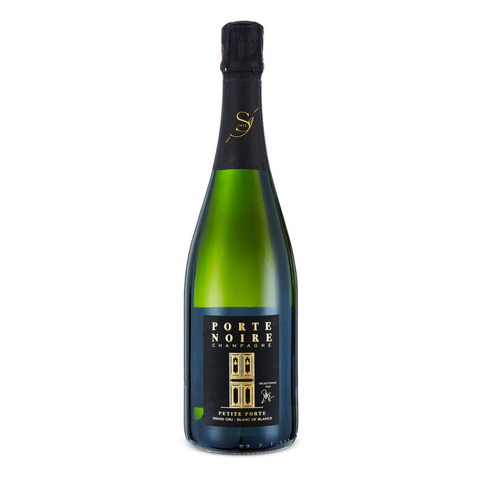
Grand Cru fruit — the top rung of Champagne's village classification, and rare at this price.

All Pinot Noir from Grand Cru villages in the Montagne de Reims, which is where the grape carries the most weight and structure in Champagne.

The benchmark cuvée from the oldest wine house in Champagne, and the clearest statement of the no-malolactic house style: rich and volumi...
Champagne and sparkling wine
Champagne from great houses such as Pol Roger, Bollinger, Taittinger, Laurent-Perrier and Louis Roederer, alongside growers such as Lelarge-Pugeot. English sparkling from Sussex and Hampshire, Franciacorta from Lombardy, Crémant d'Alsace and Prosecco complete the list. Styles run from bone-dry Brut Nature through Blanc de Blancs, rosé and vintage cuvées to gently sweet Demi-Sec.
Each product page covers how the wine tastes, the producer behind it and what to serve alongside.
Frequently asked questions
Red, white, rosé, sparkling, sweet and fortified wines, from classic regions such as Burgundy, Bordeaux, the Rhône, Piedmont, Tuscany, Rioja and Champagne to England, South Africa, New Zealand and the Americas. Every product page carries tasting notes, food pairings and a drinking window.
Yes. Gift vouchers at £40 and £50 sit in the Gifts collection, and any order can be sent to a different UK address with a gift message at checkout.
Get in touch through the contact page with the order number and a note on what did not suit. The team can point to bottles closer to the preferred style for next time.
FAQ
1. What is the difference between Champagne and other sparkling wine?
Champagne comes only from the Champagne region of France and is made by second fermentation in bottle. English sparkling, Franciacorta and Crémant use the same method elsewhere; Prosecco is usually made in tank, for a lighter, fruitier style.
2. How should sparkling wine be served?
Well chilled, at 6–8°C, in a tulip-shaped glass that keeps the bubbles and lets the aroma through. Vintage and prestige cuvées show more at 9–10°C.
3. Is sparkling wine only for celebrations?
Not at all. The acidity and bubbles make it an excellent match for oysters, fried food, sushi and salty snacks, so it earns a place at an ordinary dinner too.